
Why Family Problems Weigh So Heavily on UK Households
Family difficulty is hard everywhere, but it carries a particular weight for Muslim families in Britain. Extended family is often thousands of miles away, so there is no uncle or aunt down the road to step in early and cool things down. Two cultures meet inside one household, and what one generation reads as respect, the next reads as control. Add the cost of living, long working hours, and homes where three generations share a small space, and small disagreements harden into years of silence.
Most people in this situation have already tried talking. They have tried patience. What they are usually missing is not effort but clarity — an honest sense of which step to take next, and the peace of heart to take it.

The Family Problems UK Families Bring to Us Most Often
Almost every request we receive falls into one of these situations:
- Husband and wife tension. Constant arguments over things that never used to matter, or a marriage that has gone quiet rather than loud.
- In-law interference. The saas-bahu dynamic, a mother-in-law who will not let the couple settle, or a spouse caught between parents and partner.
- Siblings and inheritance. Property or money disputes that split brothers and sisters for years.
- Parents and adult children. Disagreements over marriage, career, or religious practice that end in ultimatums.
- Children drifting. A son or daughter pulling away from the family, the deen, or both.
- A home that changed suddenly. A settled household that turned cold or hostile with no ordinary explanation, which is where families begin to wonder about sihr or nazar.
Can Online Istikhara Actually Solve Family Problems?
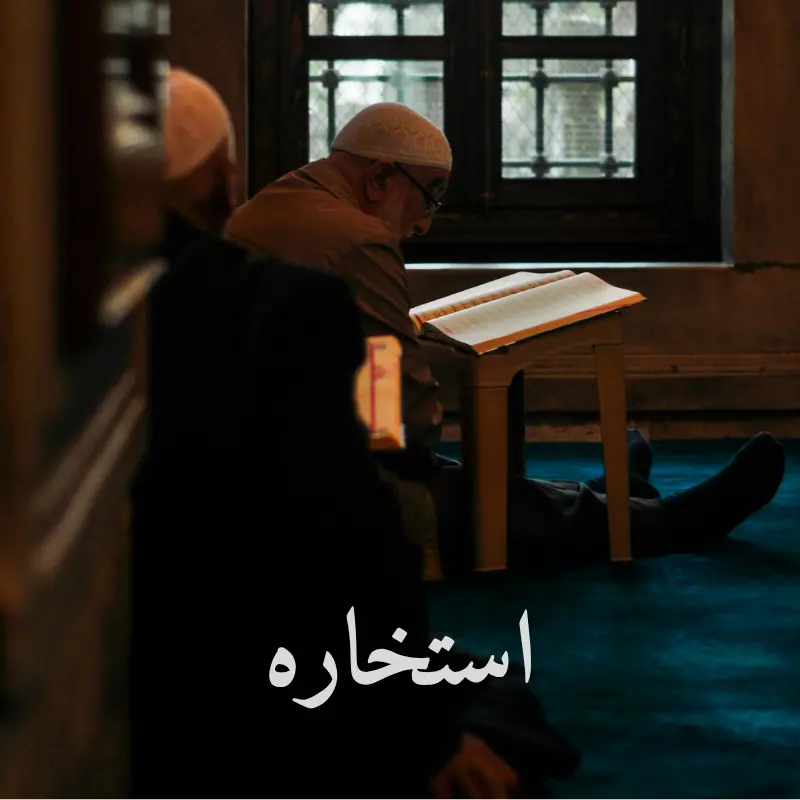
This deserves an honest answer rather than a sales one. Istikhara is not a spell, and it does not override anyone’s free will. It is a prayer, taught by the Prophet Muhammad ﷺ, in which you ask Allah to decree what is good for you in this matter and to turn you away from it if it is harmful.
“And if you fear dissension between the two, send an arbitrator from his people and an arbitrator from her people. If they both desire reconciliation, Allah will cause it between them.” (An-Nisa 4:35)
Notice what that verse holds together: sincere desire for peace, and practical arbitration, and Allah as the one who brings hearts together. Istikhara sits inside that same pattern. In practice, families tell us it does three things:
- It ends the circling. The decision you have turned over for months starts to settle one way.
- It changes what you can see, including your own part in the conflict, which is often the part nobody has named.
- It softens hearts by Allah’s permission, including yours, which is frequently where reconciliation actually begins.
What it will not do is force another adult to change. If you have been promised guaranteed results by anyone, be careful. Read our guide on what the signs after Istikhara really mean so you know what to expect.
How Online Istikhara Works for a Family Situation
The process is deliberately simple, because people reaching out are usually exhausted already.
- You share the situation. By WhatsApp or phone, in English or Urdu, in as much or as little detail as you are comfortable with. Nothing is shared with anyone.
- Scholars perform the Istikhara. The two-rakah prayer and the dua are made on your behalf, with your specific situation in mind, alongside Sunnah duas for reconciliation.
- You receive an honest response. Usually within 24 hours. If what is sensed is ease, you are told that. If it is unrest, you are told that too.
- You get ongoing guidance. Family matters unfold over months, not minutes, so you can come back as the situation develops.
The service is free and available anywhere in the United Kingdom. You can read the full method on our Online Istikhara page, or, if you would prefer to do it yourself, follow our step-by-step guide to performing Istikhara yourself — which is always best where you are able.
The Questions Families Ask Us Most
“What dua should I read for family problems?”
Keep it simple and keep it daily. Surah Al-Fatihah and Ayat al-Kursi each morning, the last two verses of Surah Al-Baqarah before sleep, and the dua of Al-Furqan 25:74, in which the believers ask Allah for comfort in their spouses and children. Above all, make dua for the person you are in conflict with, in their absence. It is among the most accepted duas, and it changes the one making it.
“How do I stop my in-laws interfering in my marriage?”
In-law interference is the most usual single cause of family disputes among Muslim families in the West. Three things move together here: continued respect and good treatment even where you disagree, calm and consistent boundaries around your own household, and dua for softening of hearts. Istikhara helps with the concrete decision underneath — whether to move out, how to raise it with your spouse, whether to involve a respected elder as the arbitrator the Qur’an describes.
“What if my husband or wife refuses to take part?”
You can still seek guidance. Istikhara can be performed on behalf of someone who will not or cannot perform it, and you never need permission to seek Allah’s guidance about your own life. See can Istikhara be done for someone else for the detail.
“Is this black magic, or are we just struggling?”
Usually the latter, and it is important to say so. Money worries, poor communication, and old unresolved hurt explain the great majority of household conflict. What genuinely raises the question is a sudden, out-of-character change in a settled home with no ordinary cause. If that describes your situation, read the signs of sihr and evil eye symptoms honestly before concluding anything, and mention it when you contact us.
“Should we stay together, or separate?”
Reconciliation is the aim wherever it is possible and safe, and Allah loves those who make peace between people. But Istikhara asks for what is genuinely good, and sometimes the guidance is that a situation should not continue. Where there is abuse, safety comes first, without exception — contact the appropriate UK support services straight away, and seek spiritual guidance alongside that, never instead of it.
Practical Steps That Belong Alongside the Prayer
Dua and action are not rivals in Islam; the camel is tied and the trust is placed in Allah. Alongside Istikhara, consider:
- Involve an arbitrator early. A respected elder or your local imam, one from each side where possible, exactly as An-Nisa 4:35 describes.
- Check your nikah is registered under UK law. A large share of Muslim marriages in Britain are religious-only and unregistered, which leaves spouses without legal protection if things break down. Take proper legal advice on this.
- Do not ignore health. Depression, chronic pain, and burnout wear down households. A GP appointment is not a lack of tawakkul.
- Protect the small habits. Praying together, eating one meal a day as a family, and a weekly conversation without phones rebuild more than any single dramatic intervention.
Confidential Guidance for Families Across the UK
Because the service is online, it reaches families in London, Birmingham, Bradford, Manchester, Glasgow, Luton and everywhere in between, in English or Urdu, with complete confidentiality. Nobody in your family or community is contacted, and nothing you share leaves us.
If your home has been heavy for a long time, you do not have to carry it alone or work out the next step by yourself. Visit our Family & Reconciliation service, or simply get in touch and tell us what is happening.
گھریلو مسائل میں مایوس نہ ہوں۔ استخارہ اور دعا کے ذریعے اللہ سے رہنمائی مانگیں، اور اپنے گھر میں دوبارہ سکون کی بحالی کے لیے ہم سے رابطہ کریں۔